Wearable Tech
Part of a research project exploring digital media and perception.
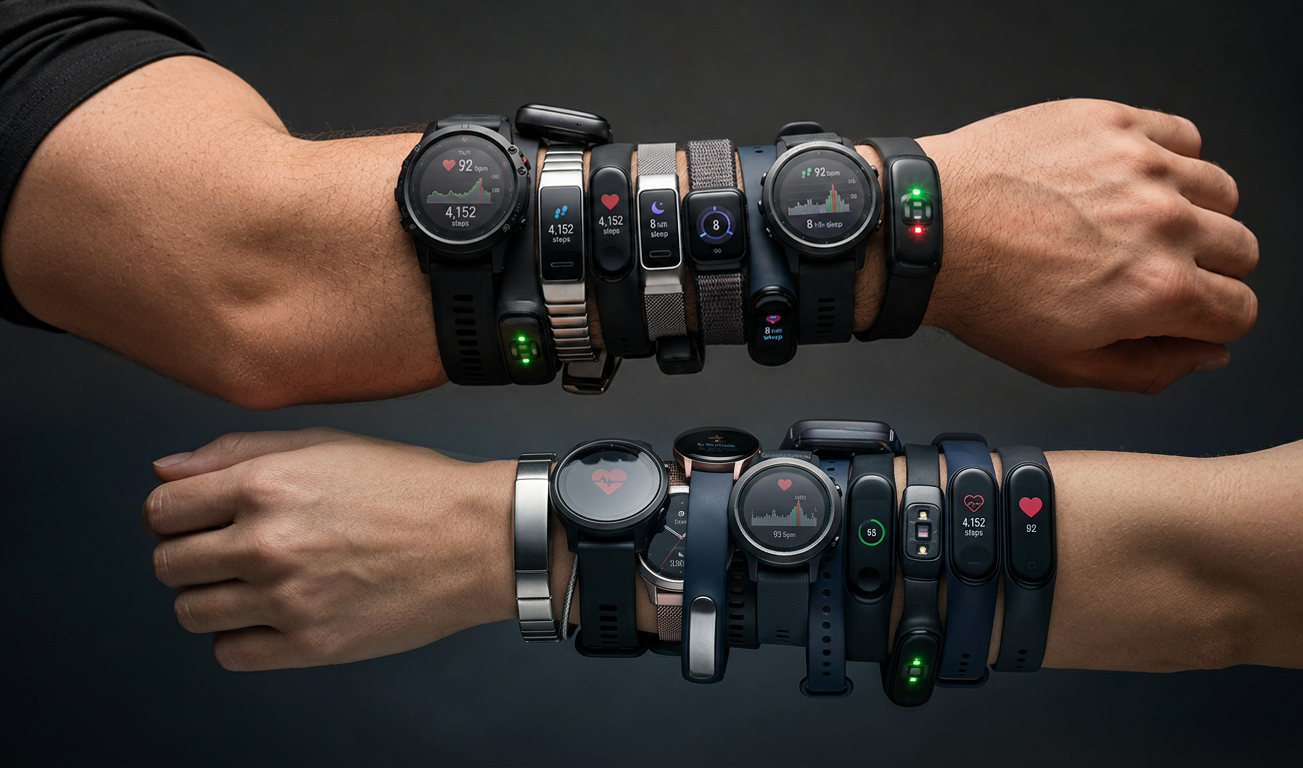
Wearable technology has changed how we understand and experience our own health. Devices that track heart rate, sleep, movement, and recovery now shape daily decisions in real time. At the same time, these metrics do more than inform. They influence how we define what is healthy, normal, and even real.
This project explores how wearable technology shapes perception through data driven feedback, social media culture, and AI assisted health systems. Drawing from research, curated media, and personal experience, the focus is on how digital metrics can both empower users and quietly redefine their understanding of well being.
As someone who has spent a career working in visual communication and perception, this shift from observing reality to measuring it raises important questions about what we trust and why.
History and Evolution
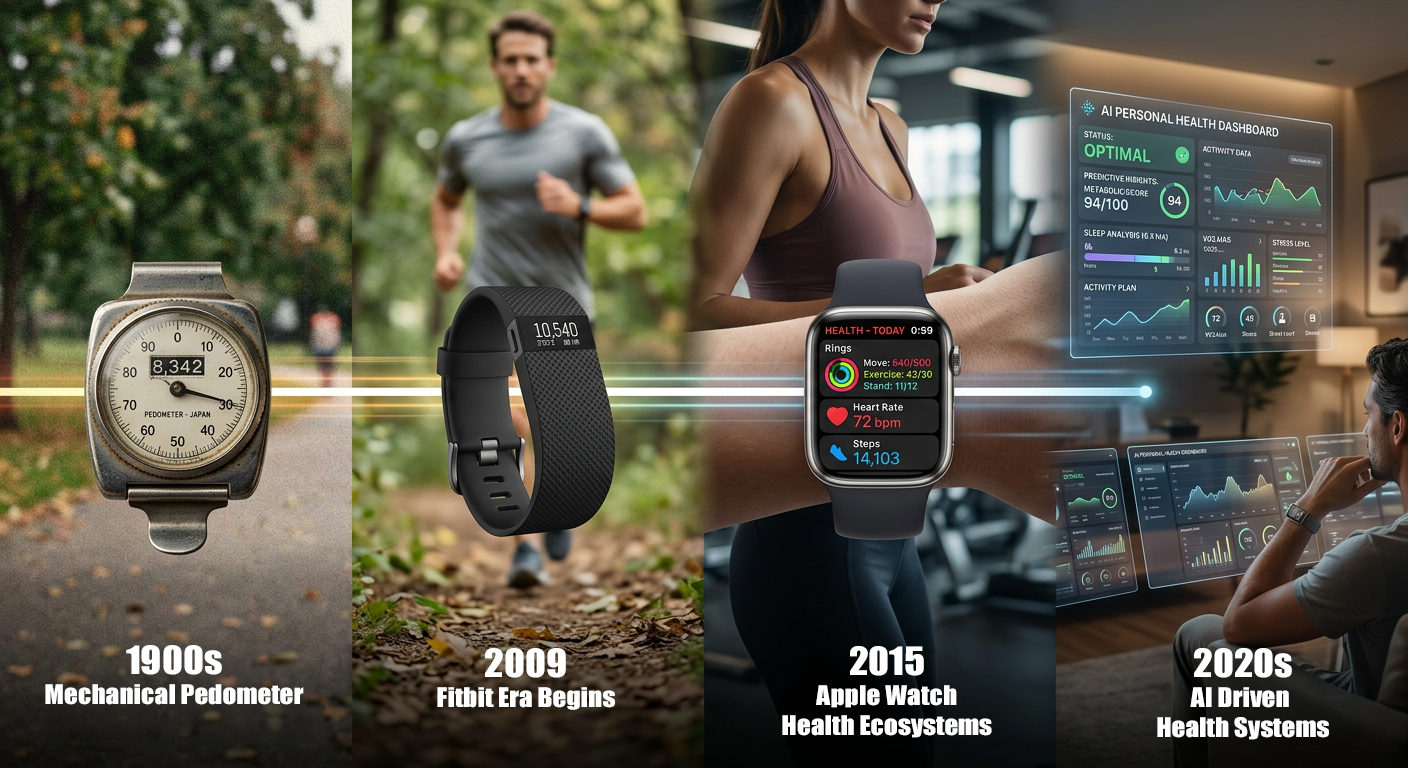
Wearable technology has evolved from simple mechanical step counters into complex systems capable of monitoring sleep patterns, heart rate variability, stress levels, recovery, and daily activity in real time. Early pedometers focused primarily on counting physical movement, while later devices such as Fitbit introduced digital health tracking to everyday consumers by combining activity monitoring with smartphone connectivity. By the mid 2010s, wearable technology expanded beyond fitness tracking as devices like the Apple Watch integrated biometric monitoring, GPS, ECG capabilities, and cloud based health ecosystems into a single platform.
As wearable systems became more advanced, artificial intelligence and predictive analytics began shaping how users interpret their own health data. Michalak (2025) explains that AI driven fitness platforms are increasingly capable of analyzing wearable metrics and generating personalized recommendations based on exercise, recovery, and behavioral trends. At the same time, Kressbach (2024) argues that digital health technologies encourage users to view the body through continuous streams of measurable data, transforming health into something constantly quantified and monitored.
Researchers such as Ninh et al. (2022) further demonstrate how consumer wearable devices are now being used in AI assisted stress detection and advanced biometric analysis. While these technologies create new opportunities for self awareness and preventative health monitoring, they also raise concerns surrounding overreliance on digital metrics, misinformation, and the psychological effects of constant self surveillance.
When Data Stops
Matching Reality
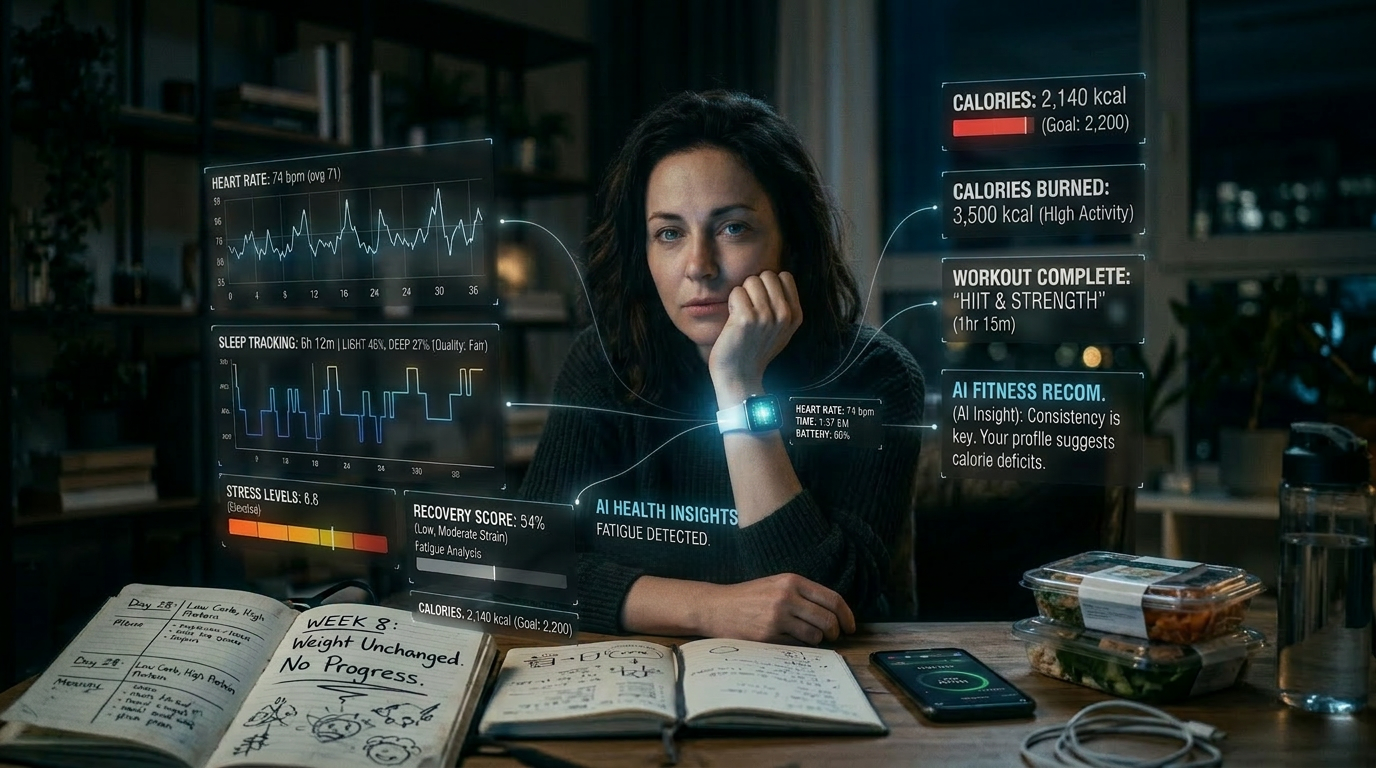
As wearable technology continues evolving, new questions are emerging about the relationship between biometric data, perception, and personal identity. Future sections of this project will explore how calorie tracking, AI driven fitness recommendations, and social media influence can shape expectations surrounding health and physical progress.
This webpage is part of an ongoing project and will continue to develop as additional research and curated content are added. Future updates will expand on the role of wearable technology in shaping perception, supported by scholarly sources and real-world examples.
APA References
Michalak, B. (2025). How we turned Apple Health data into an AI fitness coach. The Momentum AI. https://themomentum.ai/blog/how-we-turned-apple-health-data-into-an-ai-fitness-coach
Kressbach, M. (2024). Sensing health: Bodies, data, and digital health technologies. Digital Culture Books. https://doi.org/10.3998/dcb.2297
Ninh, V. T., Nguyen, M. D., Smyth, S., Tran, M. T., Healy, G., Nguyen, B. T., & Gurrin, C. (2022). An improved subject independent stress detection model applied to consumer grade wearable devices. In F. De la Prieta, H. Omatu, A. Fernandez Caballero, I. P. de la Cruz, & R. Corchado (Eds.), Advances and trends in artificial intelligence (pp. 907–919). Springer. https://doi.org/10.1007/978-3-031-10536-4_67
Select visual elements on this webpage were generated or enhanced using Adobe Firefly and curated for educational purposes as part of this research project.