Fitness Culture and Calorie Tracking
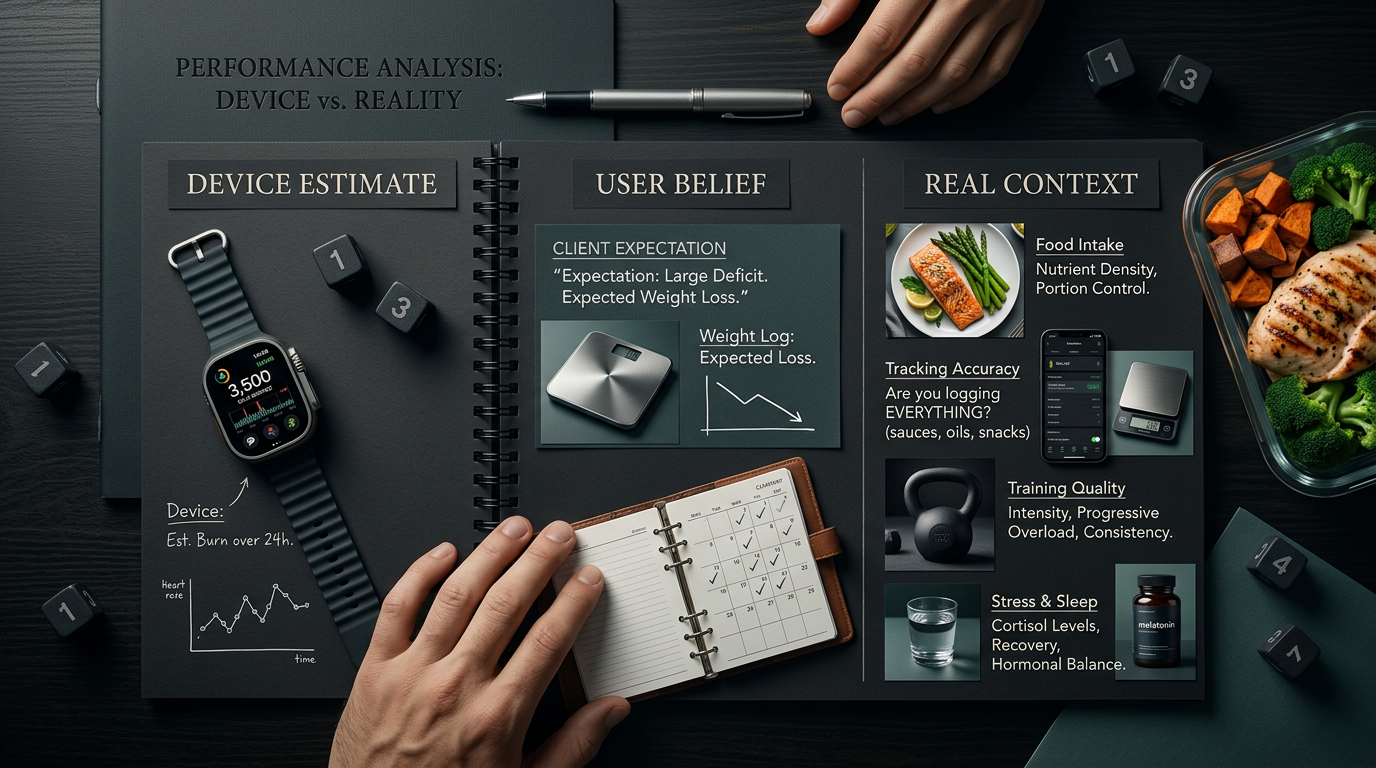
Calorie estimates can guide behavior, but they should be read alongside food intake, training quality, recovery, stress, and long term consistency.
One of the most confusing parts of wearable technology is calorie tracking. For many users, calories burned feels like a simple number. If the watch says a workout burned a large amount of energy, it is easy to believe that weight loss or body composition changes should follow automatically. In real fitness coaching, progress is rarely that simple.
From my experience helping people with workout programs, diet guidance, and fitness advice, calorie estimates can become misleading when users treat them as exact measurements. A wearable device may provide a useful estimate, but it cannot fully understand effort, food tracking accuracy, metabolism, recovery, stress, or long term consistency. This is especially important when someone is frustrated because the number on the device does not match the result they expected.
This does not mean wearable data is useless. It can help people notice patterns, stay active, and become more aware of their habits. The problem begins when the number replaces context. A calorie estimate should be treated as one piece of information, not as proof that a plan is working or failing.