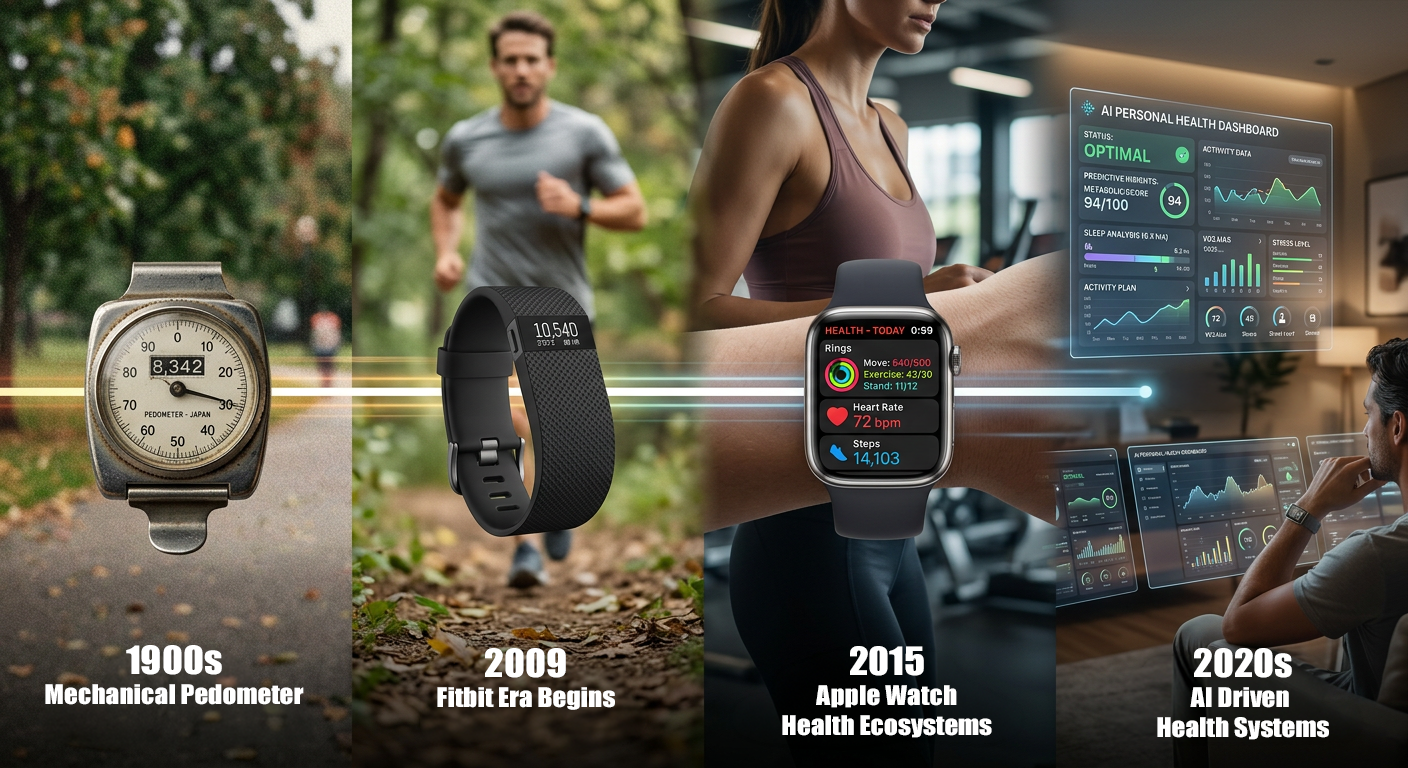
This timeline shows how self tracking moved from basic movement counting to connected fitness devices, biometric ecosystems, and AI assisted health interpretation.
History and Evolution
Wearable technology has evolved from simple mechanical step counters into complex digital systems that monitor movement, heart rate, sleep, recovery, stress, and daily activity in real time. Early pedometers were mostly designed to count steps, but later devices such as Fitbit helped bring digital health tracking into everyday life by connecting activity data to smartphones, apps, and online dashboards.
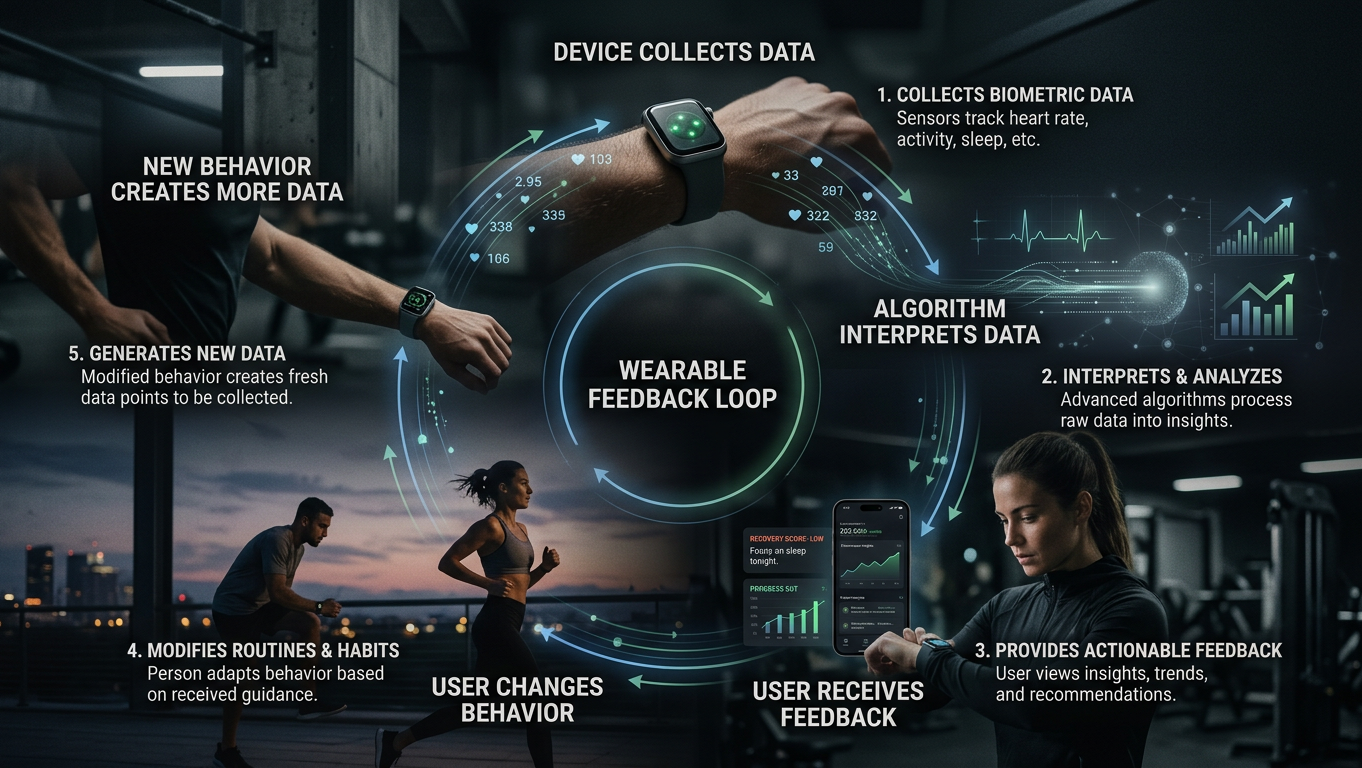
By the mid 2010s, wearable technology expanded beyond basic fitness tracking. Devices such as the Apple Watch combined biometric monitoring, GPS, heart rhythm tools, workout tracking, and cloud based health ecosystems into a single device worn throughout the day. This changed the role of wearable media. The device was no longer only recording activity after it happened. It was beginning to guide behavior, send alerts, and shape how users interpreted their own bodies.
As these systems became more advanced, artificial intelligence and predictive analytics began shaping how users understand their health data. Michalak (2025) explains how AI assisted fitness platforms can analyze Apple Health data and generate personalized recommendations based on exercise patterns, recovery, and behavior. Kressbach (2024) also connects wearable technology to a larger cultural shift, where health is increasingly understood through constant streams of digital information. In this sense, wearable devices do not simply measure the body. They help create the language people use to describe health, progress, stress, and self improvement.
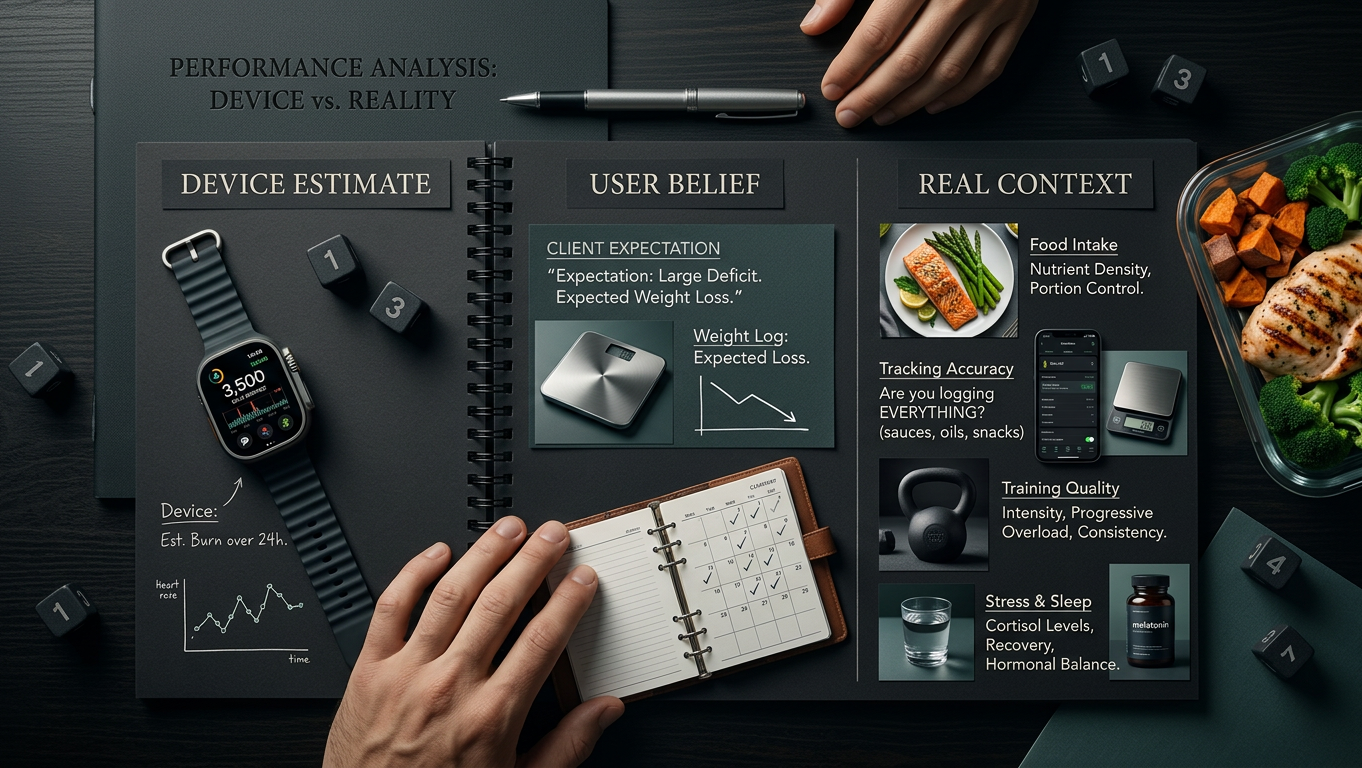
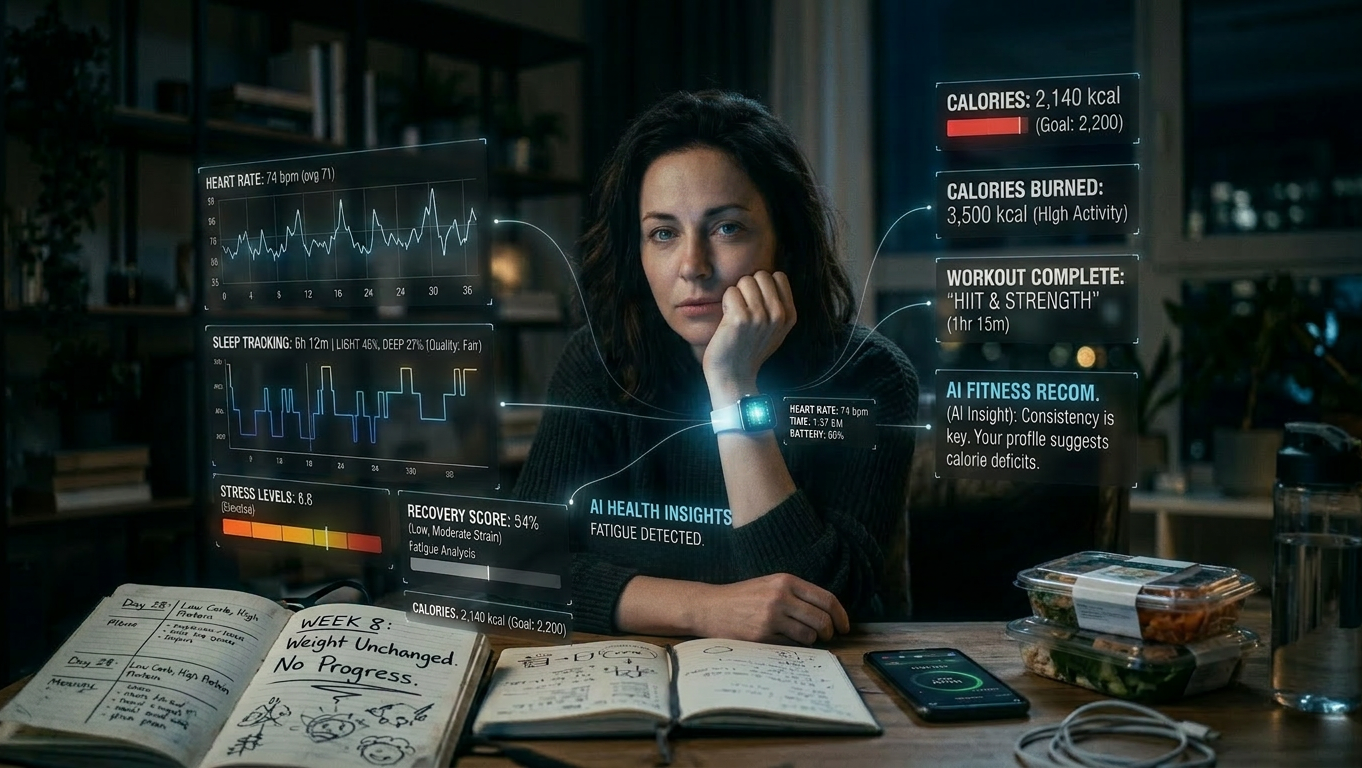
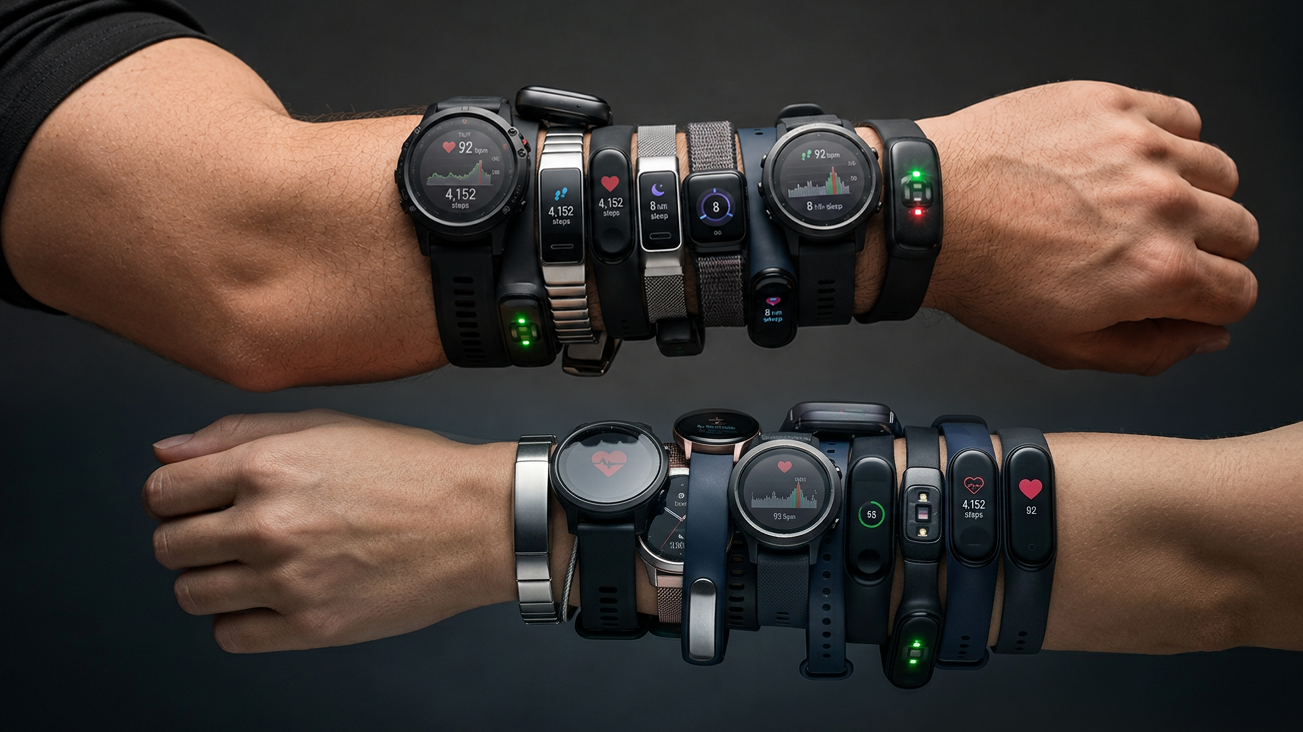
This shift matters because wearable data can feel objective, even when it still depends on sensors, algorithms, and assumptions. Shcherbina et al. (2017) warn that “the accuracy of commercial devices is largely unknown,” which is important when users treat calorie estimates, recovery scores, and activity numbers as exact truth. Their study found that heart rate measurements were generally more reliable, while energy expenditure estimates varied more significantly across devices. That difference is especially important for fitness culture because calorie tracking can influence how people judge a workout plan, diet, or personal progress.
Researchers such as Ninh et al. (2022) further show how consumer wearable devices are now being used for AI assisted stress detection and advanced biometric analysis. This creates new opportunities for self awareness and preventative health monitoring, but it also raises concerns about overreliance, misinformation, and constant self surveillance. When people begin to trust the device more than their own experience, wearable technology becomes more than a fitness tool. It becomes a media system that shapes perception, behavior, and identity.
Question to Consider
What happens when the body becomes something we check instead of something we feel?
What happens when the body becomes something we check instead of something we feel?